

The best security camera for a long driveway combines long-range motion detection, high-resolution imaging (4K is ideal), powerful color night vision, and a reliable power source. Look for models with advanced AI to distinguish between people, vehicles, and animals, minimizing false alerts, and ensure a strong connectivity solution like Wi-Fi extenders or cellular capabilities.

Table of Contents
- Why Typical Security Cameras Fall Short on Long Driveways
- What Are the Critical Features for Driveway Security Cameras?
- How Do You Overcome Long-Range Connectivity Challenges?
- Which Type of Camera is Right for Your Entry Point?
- Where is the Optimal Placement for a Driveway Camera?
- What Are Your Data Storage Options?
Why Typical Security Cameras Fall Short on Long Driveways
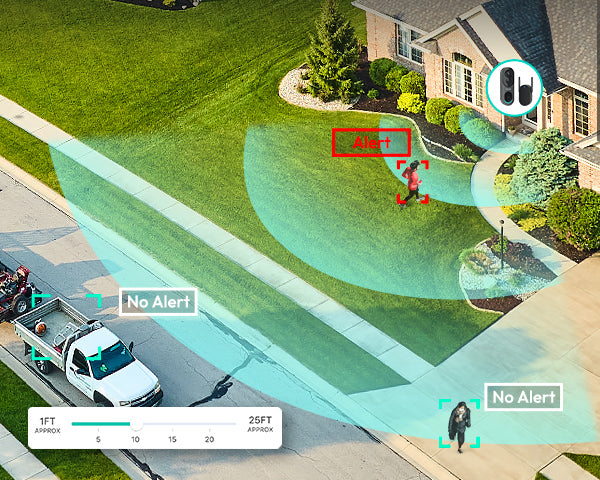
Securing a long driveway or a distant entry point presents unique challenges that standard, off-the-shelf security cameras are often ill-equipped to handle. Many indoor or short-range outdoor cameras fail because their core components are designed for proximity. Their motion sensors may only trigger at 15-20 feet, leaving the far end of your driveway completely unmonitored. By the time a person or vehicle is close enough to be detected, they are already near your home.
Furthermore, Wi-Fi connectivity is a significant hurdle. A router placed inside your home will struggle to maintain a stable, high-bandwidth connection to a camera located hundreds of feet away. This results in laggy live views, failed recordings, and delayed notifications, rendering the camera ineffective. Finally, the image quality of a basic camera degrades severely over distance. What appears as a clear face up close becomes an unidentifiable pixelated blur at 50 feet or more, making it impossible to discern important details like facial features or license plate numbers.
What Are the Critical Features for Driveway Security Cameras?
To effectively monitor a large property entrance, you need to prioritize a specific set of technological features. These elements work together to ensure you capture clear, actionable footage at the distances that matter. Selecting the Best Security Camera for this job means moving beyond basic specifications and focusing on performance-driven technology designed for long-range applications.
How Important is Video Resolution (2K vs. 4K)?
For a long driveway, resolution is paramount. While 1080p (Full HD) might be adequate for a small porch, it quickly becomes insufficient for identifying details at a distance. As you digitally zoom in on a 1080p image, it rapidly becomes pixelated and useless. This is where 2K (QHD) and 4K (UHD) resolutions make a profound difference. The increased pixel density allows you to zoom in on distant objects while retaining clarity, which is crucial for identifying a person's face, clothing, or the make and model of a vehicle.
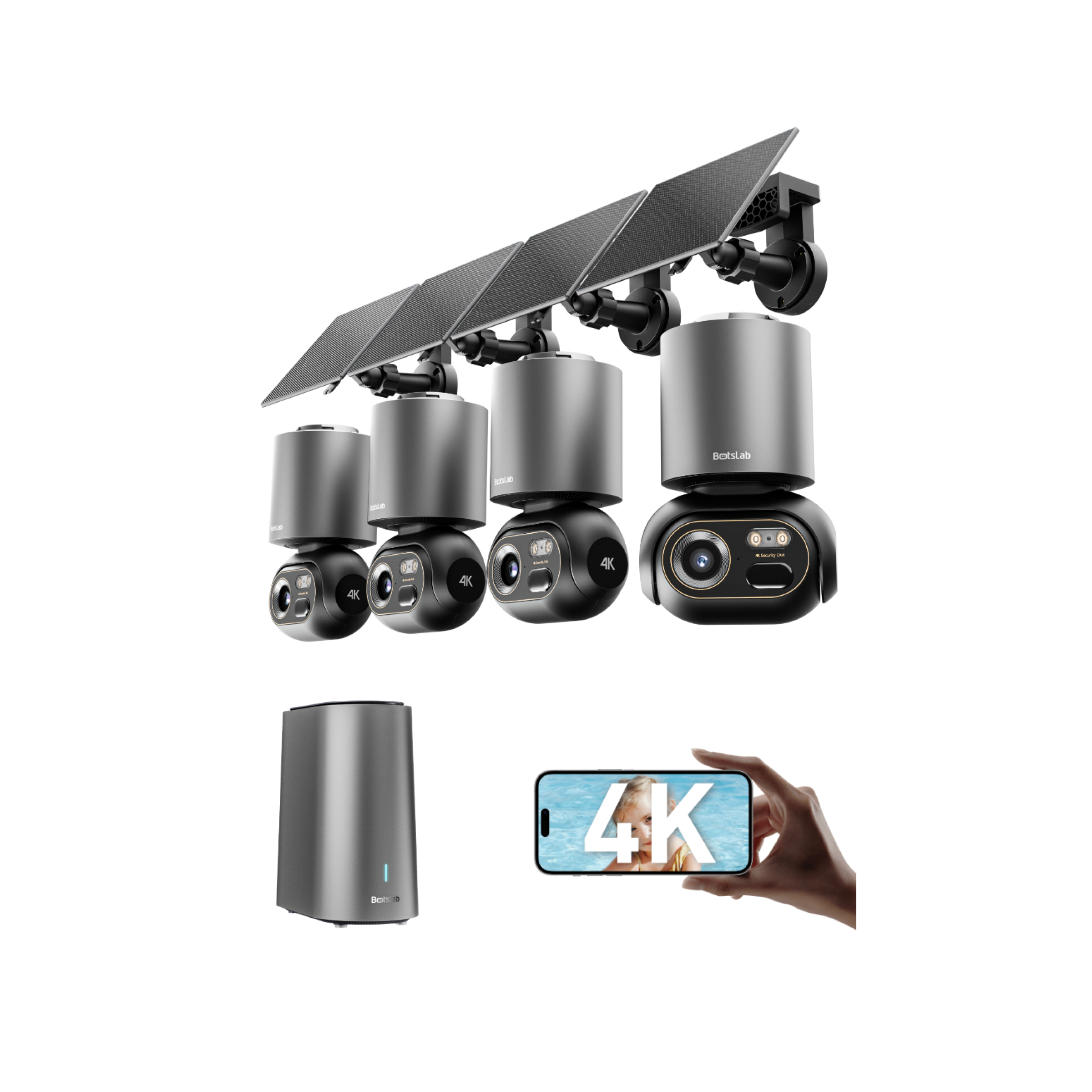
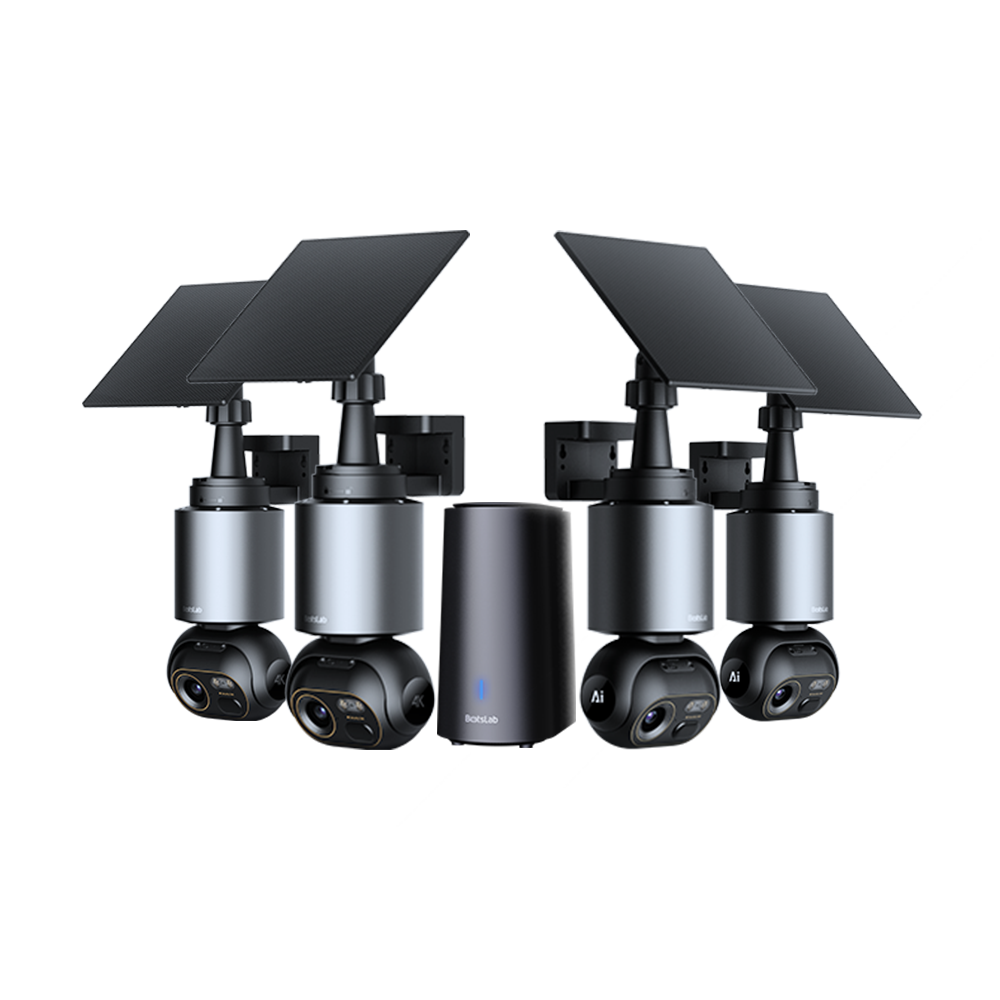
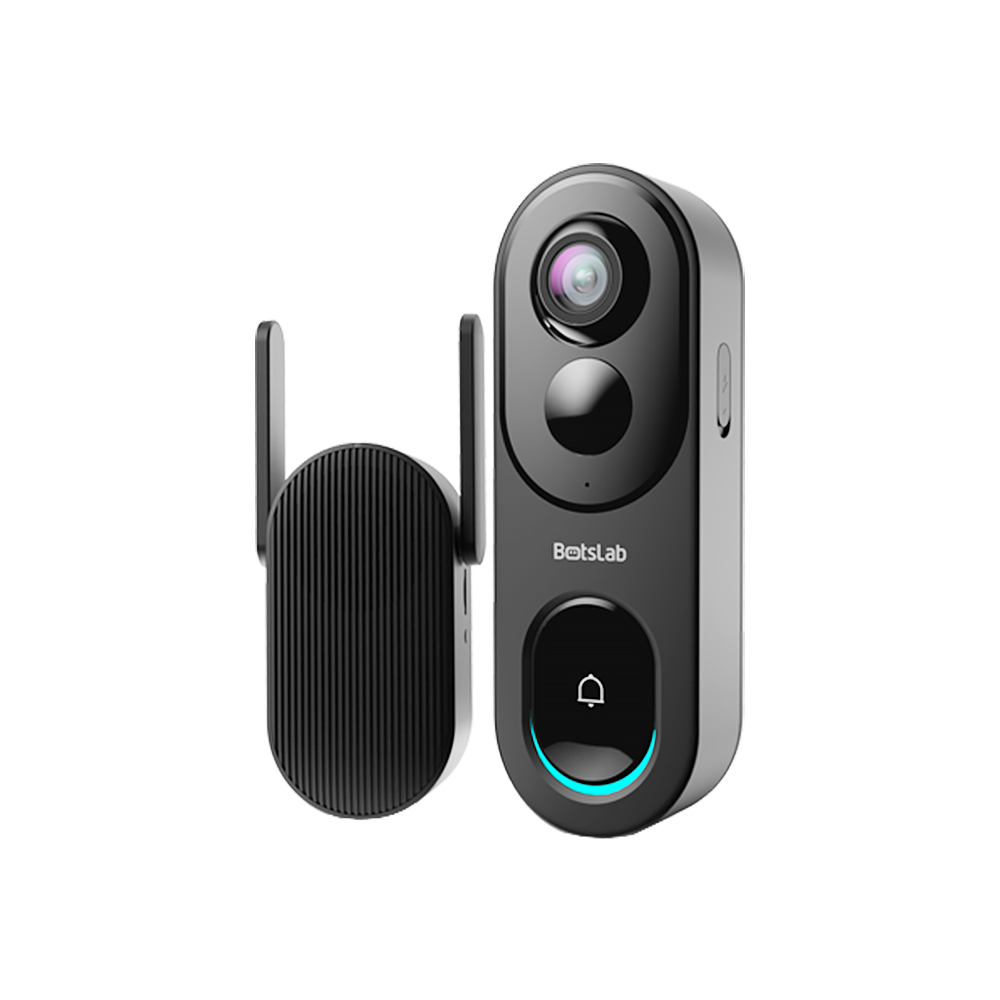
A 4K camera captures four times the number of pixels as a 1080p camera. This means that at 100 feet, you can still discern the critical details that would be lost with a lower-resolution device. When choosing a camera, investing in 4K resolution is not a luxury; it is a fundamental requirement for effective long-range identification and security. Advanced systems, such as Botslab's 4K outdoor cameras, deliver this ultra-high-definition clarity, ensuring you have a clear view of your entire property entrance.
Which Night Vision Technology is Superior?
A security threat doesn't disappear when the sun goes down, so your camera's night vision capabilities are just as important as its daytime performance. Traditional infrared (IR) night vision illuminates the scene with IR light, producing a black-and-white image. While functional, it strips away crucial identifying details like the color of a car or a person's clothing.
p>
For superior nighttime surveillance, color night vision is the gold standard. These cameras use highly sensitive sensors and sometimes a built-in spotlight to capture scenes in full, vivid color, even in low-light conditions. This technology can be the difference between seeing a "dark-colored sedan" and identifying a "blue Honda Accord." The ability to capture color details provides law enforcement with far more useful information and gives you a much clearer understanding of nighttime events on your property.
What is the Ideal Detection Range and Field of View?
A camera's specifications will list its detection range, which is the maximum distance at which its sensor can reliably detect motion. For a long driveway, you need a camera with a robust and adjustable long-range detection capability, ideally 50 feet or more. This ensures you are alerted the moment activity occurs at the entrance to your property, not when it's halfway to your door. Adjustable sensitivity is also important to fine-tune detection and avoid false alarms from distant traffic or swaying trees.
The field of view (FOV) determines how wide an area the camera can see. A wider FOV (130 degrees or more) is beneficial for monitoring a broad entryway. However, an extremely wide FOV can cause a "fisheye" effect and reduce the detail of objects farther away. The optimal solution is often a camera with a balanced FOV or, for maximum coverage, a Pan-Tilt-Zoom (PTZ) camera that can be remotely controlled to survey a very large area.
How Do You Power a Camera at the End of a Driveway?
Running power cables down a several-hundred-foot driveway is often impractical and expensive. This makes wire-free power solutions the most logical choice for distant camera placements.
| Power Source | Pros | Cons |
|---|---|---|
| Battery-Powered | Extremely easy to install; no cables needed; can be placed anywhere. | Requires periodic recharging; battery life can be affected by cold weather and frequent recording. |
| Solar-Powered | Self-sustaining; environmentally friendly; ideal for "set-it-and-forget-it" placements. | Dependent on sufficient sunlight; may struggle in heavily shaded areas or during long periods of overcast weather. |
| Wired | Constant, reliable power; no need to worry about batteries. | Installation can be complex, expensive, and disruptive, especially for long distances. |
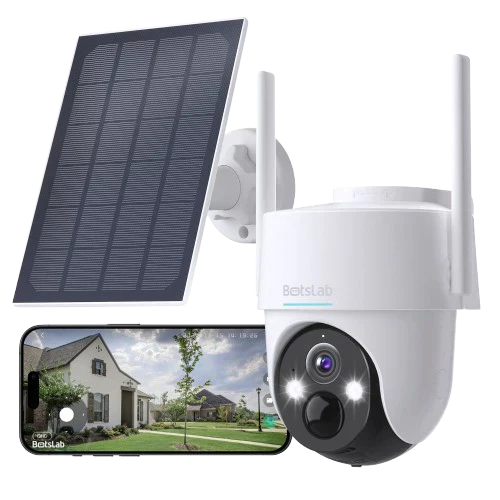
For most long driveway applications, a battery-powered camera paired with a solar panel accessory offers the best of both worlds. The battery provides reliable power, while the solar panel continually tops it up, dramatically extending the time between manual charges and often eliminating the need for them entirely. This combination provides the placement flexibility of a wire-free device with the endurance of a wired one.
Why is AI Detection a Game-Changer for Security?
One of the biggest annoyances with older security cameras is the constant stream of false alerts. Wind-blown leaves, passing animals, or headlight-triggered shadows can send you dozens of meaningless notifications a day. Modern cameras solve this with on-device or cloud-based Artificial Intelligence (AI). AI-powered cameras can differentiate between people, vehicles, pets, and general motion.
This intelligence allows you to customize your alerts. For instance, you can set the camera to notify you only when a person or vehicle enters your driveway, ignoring the neighbor's cat or a rustling bush. This drastically reduces notification fatigue and ensures that when you do get an alert, it's for an event that truly matters. Botslab's cutting-edge AI algorithms provide this precise detection, allowing for smarter alerts and a more focused security experience, giving you peace of mind without the noise.
How Do You Overcome Long-Range Connectivity Challenges?
A powerful camera is useless without a stable connection to your network. At the end of a long driveway, your home's Wi-Fi signal is likely to be weak or non-existent. Fortunately, there are several effective solutions to this problem.
Strengthening Your Wi-Fi Signal for Better Coverage
The most common approach is to extend your existing Wi-Fi network. A simple Wi-Fi extender can help, but for a very long driveway, a more robust solution is needed. A Wi-Fi mesh network, which uses multiple nodes placed around your property to create a wide and seamless web of coverage, is an excellent option. Alternatively, a dedicated point-to-point (PtP) wireless bridge can beam a strong, directional internet signal from your home to a receiver near the camera, providing a highly reliable connection over very long distances.
When to Consider Cellular (4G/LTE) Cameras
When extending Wi-Fi is not feasible, such as at a remote gate or on a very large property, a cellular security camera is the ideal solution. These cameras operate independently of your Wi-Fi network, using 4G or 5G connectivity just like a smartphone. They require a data plan from a cellular provider, but they offer unparalleled placement flexibility. You can install them anywhere there is a cellular signal, making them perfect for monitoring gates, detached barns, or long, winding entry points far from the main house.
Which Type of Camera is Right for Your Entry Point?
The physical form of the camera also plays a role in its effectiveness. Different styles are suited for different security philosophies and placement locations.
Bullet Cameras: The Visible Deterrent
Bullet cameras are a classic choice for outdoor security. Their distinct, elongated shape makes them highly visible, which acts as a powerful deterrent to potential intruders. They are easy to mount and aim, and їх housing often provides good protection from the elements. Their visibility sends a clear message that your property is monitored.
p>
PTZ (Pan-Tilt-Zoom) Cameras: The Ultimate Coverage
For large or irregularly shaped driveways, a single fixed camera may not be enough. A Pan-Tilt-Zoom (PTZ) camera offers the ultimate flexibility. You can remotely control the camera to pan left and right, tilt up and down, and zoom in on specific areas of interest. Many PTZ cameras also support automated "guard tours," where the camera automatically cycles through preset positions, allowing one device to monitor an area that would otherwise require multiple fixed cameras.
Where is the Optimal Placement for a Driveway Camera?
Proper camera placement is crucial for maximizing effectiveness. The goal is to capture clear, identifiable footage of anyone entering your property. Mount the camera high enough to be out of easy reach (around 9-12 feet is ideal), which also provides a better vantage point over the area. Angle it downwards to capture faces rather than the tops of heads.
Pay attention to the sun's path. Avoid pointing the camera directly at the rising or setting sun, as the intense glare can wash out the image. If possible, position the camera so that approaching vehicles or people are illuminated by ambient light sources at night, which will enhance the quality of your night vision footage. Finally, ensure the camera's view is not obstructed by tree branches, posts, or other objects.
What Are Your Data Storage Options?
Once your camera records an event, you need a secure place to store the footage. There are two primary methods: local and cloud storage. Many cameras offer both, giving you flexibility and redundancy.
Local storage typically involves a microSD card inserted directly into the camera or a central Network Video Recorder (NVR) hub located inside your home. The main advantage is that there are no monthly fees, and you have physical control over your data. However, if a thief steals the camera, they also steal the footage on the SD card.
Cloud storage automatically uploads your video clips to a secure remote server. This means your footage is safe even if the camera is stolen or damaged. It also allows you to access your clips from anywhere via a smartphone app. Most cloud services require a monthly or annual subscription fee, but they provide convenience, security, and peace of mind.












Share:
Which security camera brands are good and worth recommending?
Which Security Cameras Provide the Most Customizable Motion Detection Zones?