

The best wireless outdoor camera for monitoring large acreage is typically a 4G/LTE cellular camera combined with a solar panel for power. This setup overcomes the primary challenges of Wi-Fi range limitations and access to electricity. Key features to prioritize include Pan-Tilt-Zoom (PTZ) for broad coverage, high resolution (2K or 4K) for clear identification, advanced color night vision for 24/7 visibility, and robust weatherproofing (IP66 or higher) to withstand the elements.

In This Document
- What Unique Challenges Does Monitoring Large Acreage Present?
- How Do I Choose the Right Connectivity: Wi-Fi vs. Cellular?
- What Power Source is Most Reliable for Remote Cameras?
- Which Camera Features are Essential for Covering Expansive Areas?
- Why are Smart Detection and Alerts Critical for Large Properties?
- What Should I Look for in Terms of Durability and Weatherproofing?
- Where Should Cameras Be Placed for Optimal Coverage on a Large Property?
- How Does Botslab Address Modern Security Needs for Properties?
What Unique Challenges Does Monitoring Large Acreage Present?
Securing a large property, such as a farm, ranch, or rural estate, introduces a set of security challenges that standard home security systems are not equipped to handle. The sheer scale of the area means you must contend with significant distances, a lack of infrastructure, and exposure to harsh environmental conditions. Understanding these specific hurdles is the first step toward building an effective surveillance strategy.
The three most significant obstacles are connectivity, power, and coverage. Standard Wi-Fi signals rarely extend to distant gates, barns, or fence lines. Similarly, electrical outlets are often non-existent in remote corners of a property, making wired cameras impractical. Finally, a single camera with a fixed lens can only see a tiny fraction of a multi-acre space, leaving vast blind spots. Any effective solution must directly address these core issues to provide meaningful security.
How Do I Choose the Right Connectivity: Wi-Fi vs. Cellular?
Connectivity is the lifeline of your security camera, enabling it to send footage and alerts to your device. For large properties, you have two primary wireless options: extending your existing Wi-Fi network or using a camera with its own cellular connection. The right choice depends entirely on your property's layout and existing infrastructure.
When to Choose Wi-Fi Systems
A Wi-Fi-based wireless outdoor camera for large acreage is an excellent choice for monitoring areas that are within a reasonable distance of your main building, such as the immediate yard, driveway, front gate, or nearby outbuildings. You can use Wi-Fi range extenders or mesh network systems to push the signal further out, but this approach has its limits. These systems are generally more cost-effective if you already have a robust internet service and don't require monitoring at the most distant points of your property.
Modern Wi-Fi cameras offer a streamlined experience with easy setup and integration into your smart home ecosystem. They provide high-quality video and advanced features without the need for a separate data plan, making them ideal for the core security zone around your home or primary structures.
When to Choose Cellular (4G/LTE) Systems
For true remote monitoring—watching over distant fields, livestock, equipment sheds, or property boundaries far from any Wi-Fi signal—a cellular camera is the definitive solution. These cameras contain a SIM card and use 4G/LTE networks to transmit data, just like a smartphone. They are completely independent of your home Wi-Fi and can be placed anywhere there is cell service.
While they require a monthly data plan, the autonomy they provide is unmatched for securing vast and remote acreage. A cellular camera is the only practical way to keep an eye on a water tank a mile away or a gate at the far end of your property line without investing in complex and expensive network infrastructure.
What Power Source is Most Reliable for Remote Cameras?
A wireless camera isn't truly wireless if it needs to be plugged into an outlet. For remote locations typical of large properties, battery and solar power are the only feasible options. They provide the freedom to install a camera exactly where it's needed most, regardless of electrical access.
Long-Duration Battery Power
Battery-powered cameras offer the ultimate flexibility in placement. Top-tier models are equipped with high-capacity rechargeable batteries that can last for months on a single charge, depending on usage and settings. This makes them perfect for areas where you need surveillance but running a power line is impossible. The key is to choose a camera optimized for low power consumption, which uses motion-activated recording to conserve energy, only waking up when it detects activity.
Integrated Solar Power
For a truly "set-and-forget" solution, nothing beats a camera paired with a solar panel. A small, dedicated solar panel can continuously trickle-charge the camera's internal battery during daylight hours. This creates a self-sustaining system that can operate indefinitely without manual recharging, provided it receives a few hours of direct sunlight each day. Solar-powered cameras are the gold standard for long-term, low-maintenance surveillance in off-grid locations on your property.
Which Camera Features are Essential for Covering Expansive Areas?
Beyond connectivity and power, the camera's optical and functional capabilities determine how effective it will be. For large areas, you need more than just a basic video feed; you need tools that provide clarity, coverage, and context.
Why is a Wide Field of View and PTZ Functionality Important?
A camera with a fixed, narrow lens is like looking at your property through a drinking straw. For large acreage, you need a wide perspective. Look for cameras with a wide field of view (130° or more) to capture more of the scene in a single frame.
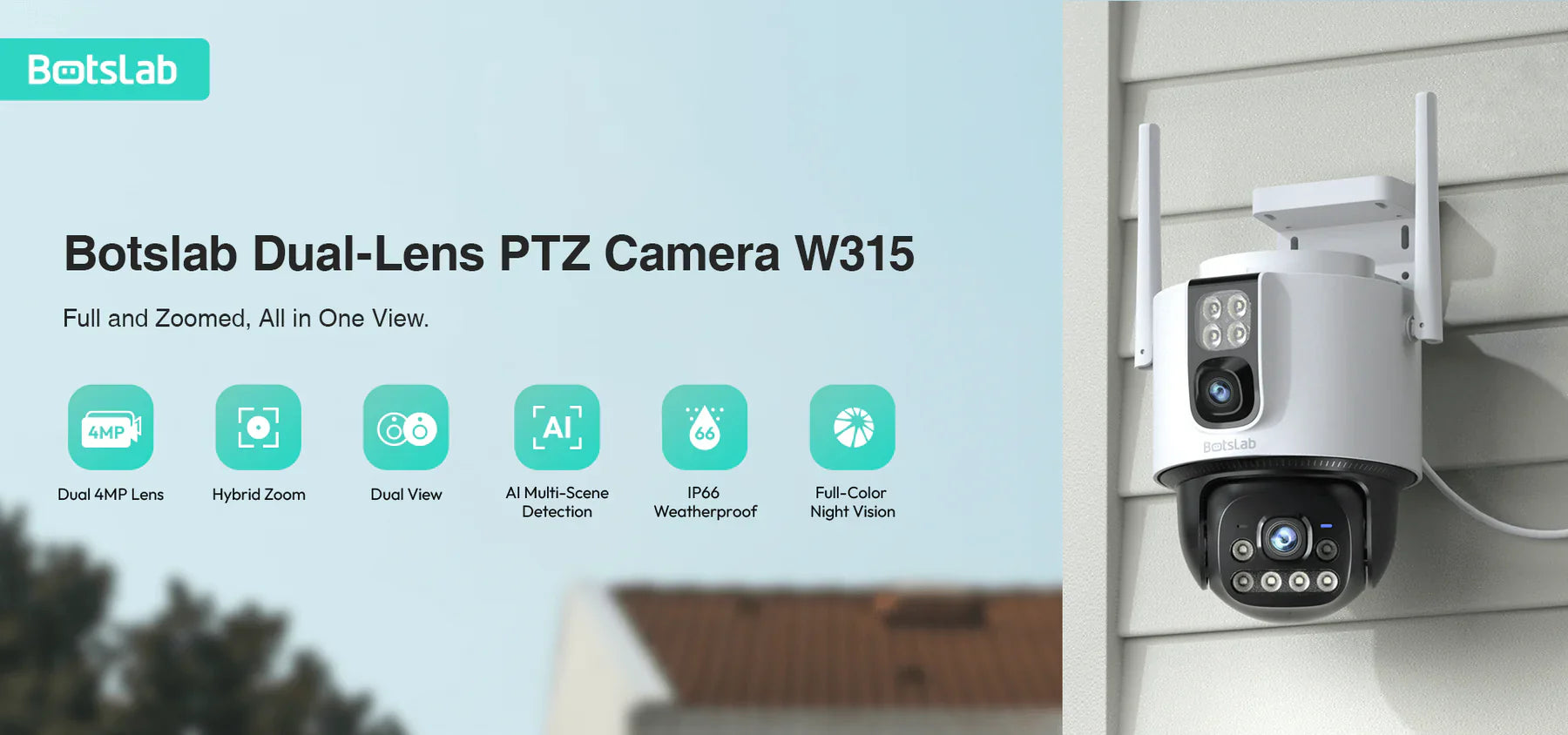
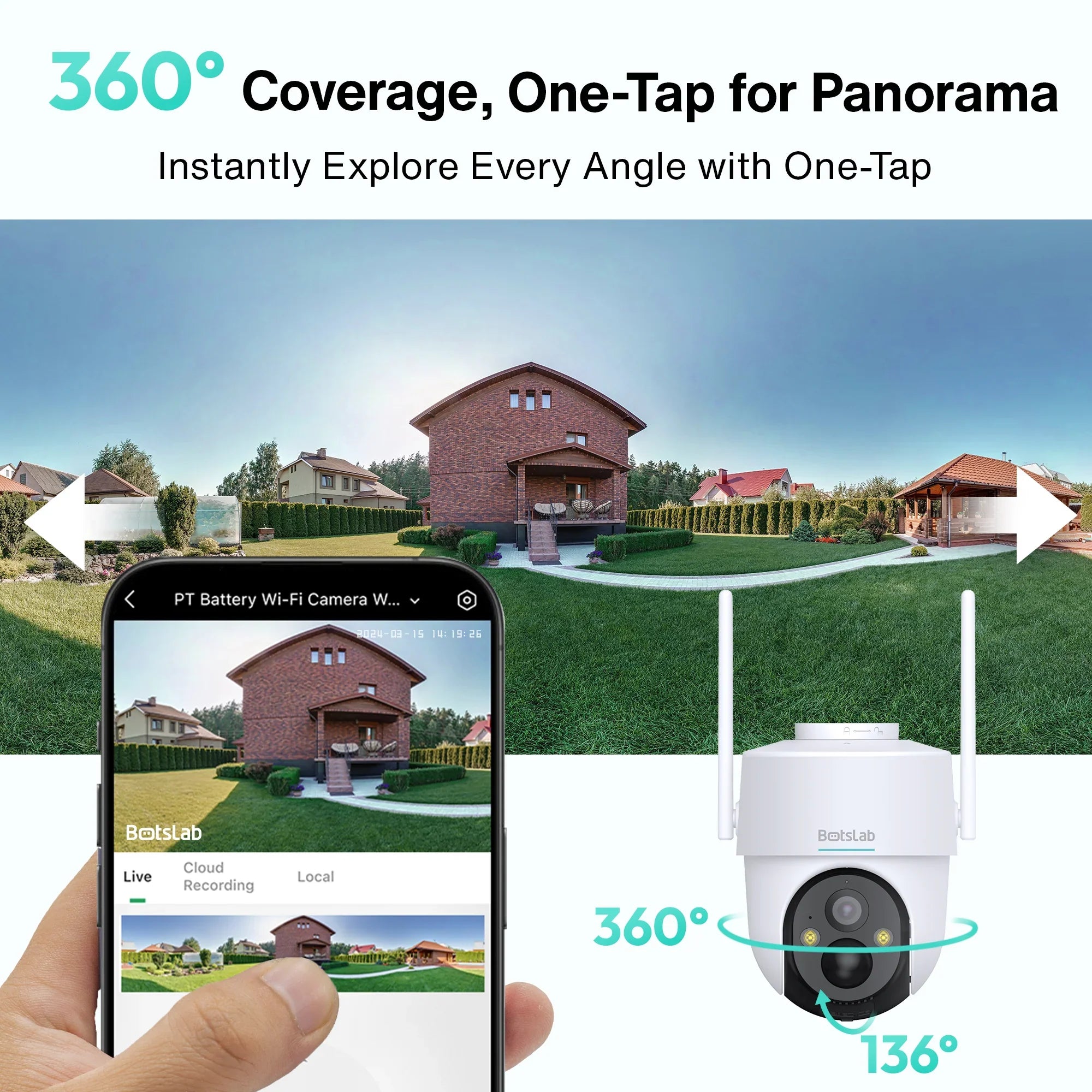
Even better is a camera with Pan-Tilt-Zoom (PTZ) capabilities. PTZ allows you to remotely control the camera to look left and right (pan), up and down (tilt), and get a closer look at specific objects (zoom). A single PTZ camera can effectively monitor an area that might otherwise require three or four fixed cameras, allowing you to survey a large pasture, track a vehicle coming down a long driveway, or check on different areas of a work site.
What Level of Video Resolution is Necessary?
On a large property, subjects of interest—like a person, vehicle, or animal—may be far from the camera. Standard HD (720p or 1080p) may not provide enough detail to identify them clearly from a distance. For this reason, a higher resolution is critical.
Aim for a camera with at least 2K (QHD) resolution. This provides significantly more pixels than 1080p, allowing you to zoom in on recorded footage and still see sharp details like faces or license plates. For maximum clarity, 4K resolution offers the best possible detail, though it requires more storage space and bandwidth.
How Does Advanced Night Vision Enhance 24/7 Security?
Your property doesn't stop being vulnerable when the sun goes down. Traditional infrared (IR) night vision provides grainy, black-and-white video, which can make it difficult to identify important details. Modern cameras now offer advanced color night vision. By using highly sensitive sensors and often a built-in spotlight, these cameras can produce full-color video in low-light conditions. This is a game-changing feature, as color provides crucial context—distinguishing the color of a car, a piece of clothing, or the fur of an animal.
Why are Smart Detection and Alerts Critical for Large Properties?
A camera that alerts you to every blowing leaf or passing shadow is more of a nuisance than a security tool. On a large property with abundant wildlife and changing weather, intelligent detection is non-negotiable. Look for cameras that use Artificial Intelligence (AI) to differentiate between people, vehicles, and animals.
This AI-powered detection allows you to customize your alerts. For example, you can set the camera at your front gate to only notify you when a vehicle approaches, ignoring deer or other animals. You can also create custom motion zones to monitor specific areas, such as a fuel tank or equipment pile, and ignore routine traffic on a nearby path. These smart features drastically reduce false alarms and ensure that the alerts you receive are for events that actually matter.
What Should I Look for in Terms of Durability and Weatherproofing?
An outdoor camera on a large property will be exposed to everything nature can throw at it: torrential rain, driving snow, dust storms, and extreme temperatures. Its durability is paramount. The most important specification to check is the Ingress Protection (IP) rating.
The IP rating is a two-digit number. The first digit rates its protection against solids (like dust), and the second rates its protection against liquids (like water).
| IP Rating | Protection Level | Best Use Case |
|---|---|---|
| IP65 | Dust-tight and protected against water jets from any angle. | Good for placement under an eave or in a semi-protected area. |
| IP66 | Dust-tight and protected against powerful water jets. | Excellent for most exposed outdoor locations. Can withstand heavy rain and storms. |
| IP67 | Dust-tight and protected against temporary immersion in water. | Superior protection, suitable for locations prone to flooding or extreme weather. |
For a camera that will be fully exposed on a post or tree in the middle of a field, an IP66 rating or higher is strongly recommended to ensure long-term reliability.
Where Should Cameras Be Placed for Optimal Coverage on a Large Property?
Strategic placement is just as important as the technology itself. Think in terms of layers and choke points.
- Entry and Exit Points: Place cameras at all gates, driveways, and main access roads to your property. This ensures you have a record of every person and vehicle that enters or leaves.
- High-Value Areas: Install cameras focused on barns, workshops, fuel storage tanks, and areas where expensive equipment is kept.
- Primary Buildings: Secure the main house and any guest houses or significant outbuildings with cameras covering doors, windows, and main approaches.
- Vantage Points: Use high points like poles or tall trees to mount a PTZ camera. This can provide a sweeping, unobstructed view of a large open area like a pasture or field.
By focusing on these key zones, you create a comprehensive security network that covers your most critical assets and access points without needing to blanket every square foot of your land with cameras.
How Does Botslab Address Modern Security Needs for Properties?
At Botslab, we focus on creating smart, reliable, and user-friendly security solutions that address real-world challenges. For homeowners with large properties, our wire-free outdoor cameras serve as a powerful first line of defense, ideal for securing the home, yard, and nearby structures within your Wi-Fi zone.
The Botslab Outdoor W313, for example, is engineered with the key features needed for property surveillance. Its crystal-clear 2K resolution ensures you capture sharp, identifiable details, while its advanced color night vision turns night into day, revealing crucial information that black-and-white video misses. With a long-lasting battery+Solar panels + rechargeable batteries, simple wire-free installation, and a durable, weatherproof design, it can be placed exactly where you need it most—on a porch, overlooking a driveway, or monitoring a barn.
Furthermore, our cameras are powered by sophisticated AI detection that intelligently distinguishes people from other motion, drastically minimizing false alerts. This means you are only notified of what truly matters, which is essential for any property owner. By integrating a high-performance Botslab camera system around your home, you establish a robust security hub that can work in concert with specialized cellular cameras for a complete, multi-layered strategy to protect your entire acreage.
Share:
What is the Best Dash Cam for Truckers Requiring Multiple Camera Channels?
Which 4K Security Camera Systems Offer the Best Local NVR/DVR Storage Options?