

Les meilleures caméras de sécurité pour chantiers offrent une robustesse à toute épreuve (IP66+), des options d'alimentation flexibles (solaire ou batterie), une connectivité fiable via 4G LTE ou Wi-Fi performant, et une vidéo haute résolution (4K) pour une netteté optimale. Les modèles haut de gamme intègrent également des fonctions d'enregistrement en accéléré, une détection de mouvement avancée par IA pour réduire les fausses alertes, et une vision nocturne performante pour une protection continue des biens.

Table des matières
- Pourquoi la sécurité spécialisée est-elle essentielle sur les chantiers de construction ?
-
Quelles sont les caractéristiques clés qui définissent les meilleures caméras de chantier ?
- Quelle importance revêt la durabilité et l'étanchéité ?
- Quelles sont les meilleures options d'alimentation et de connectivité ?
- Pourquoi la vidéo haute résolution et la vision nocturne avancée sont-elles non négociables ?
- Comment les fonctions PTZ et les grands angles de vision améliorent-ils la couverture ?
- Quelles sont les solutions de stockage les plus fiables ?
- Quelles caméras excellent dans la prise de vue en accéléré sur les chantiers ?
- Comment la détection par IA transforme-t-elle la sécurité des sites web ?
- Quelles sont les meilleures recommandations en matière de caméras pour les chantiers de construction ?
- Comment installer et positionner correctement les caméras sur un chantier ?
- Questions fréquentes sur la sécurité des chantiers de construction
Pourquoi la sécurité spécialisée est-elle essentielle sur les chantiers de construction ?
Les chantiers de construction sont des environnements dynamiques et à forte valeur ajoutée, particulièrement vulnérables à divers risques. Contrairement à un bâtiment achevé, un chantier est un espace ouvert et en constante évolution, rempli de matériaux coûteux, d'outils et d'engins lourds. Le déploiementde caméras de sécurité spécialisées pour la surveillance des chantiers vise principalement à lutter contre le vol et le vandalisme. Les câbles de cuivre, le bois, les appareils électroménagers et les équipements onéreux sont des cibles privilégiées, et les pertes peuvent entraîner des pertes financières importantes et des retards de projet.
Au-delà de la protection des biens, une surveillance efficace est essentielle à la gestion de projet et au respect des normes de sécurité. Les responsables de chantier peuvent suivre à distance l'avancement des travaux, vérifier la présence des entreprises et s'assurer du respect des protocoles de sécurité. En cas d'accident ou de litige, des enregistrements vidéo de haute qualité constituent un enregistrement irréfutable des événements, précieux pour les demandes d'indemnisation et les enquêtes en responsabilité. Ce double rôle – sécurité et supervision opérationnelle – fait d'un système de caméras performant un investissement stratégique et non une simple dépense.
Quelles sont les caractéristiques clés qui définissent les meilleures caméras de chantier ?
Choisir la caméra adaptée à un chantier de construction va bien au-delà des spécifications de sécurité standard. La nature exigeante et temporaire de ces environnements requiert des caractéristiques spécifiques garantissant fiabilité, performance et utilité, de la première pelletée de terre à la fin du projet.
Quelle importance revêt la durabilité et l'étanchéité ?
C'est extrêmement important. Une caméra de chantier est constamment exposée aux intempéries. Elle doit résister à la pluie, à la neige, à la poussière, aux températures extrêmes et aux vents violents. Privilégiez les caméras avec un indice de protection (IP) de IP66 ou supérieur . L'indice IP66 garantit une étanchéité totale à la poussière et une résistance aux jets d'eau puissants, ce qui la rend adaptée à toutes les conditions extérieures.
Le boîtier doit être fabriqué dans des matériaux durables comme le métal plutôt que le plastique afin de résister aux impacts de débris et aux tentatives de sabotage. Pour les sites à haut risque de vandalisme, un indice de protection IK (par exemple, IK10) est également recommandé, car il indique la résistance de la caméra aux chocs mécaniques. Une caméra hors service à cause des intempéries représente un système de sécurité totalement inefficace.
Quelles sont les meilleures options d'alimentation et de connectivité ?
Les chantiers manquent souvent d'alimentation électrique permanente et d'une connexion Wi-Fi stable, surtout au début des travaux. Par conséquent, une alimentation électrique et une connectivité polyvalentes sont indispensables.
-
Options d'alimentation :
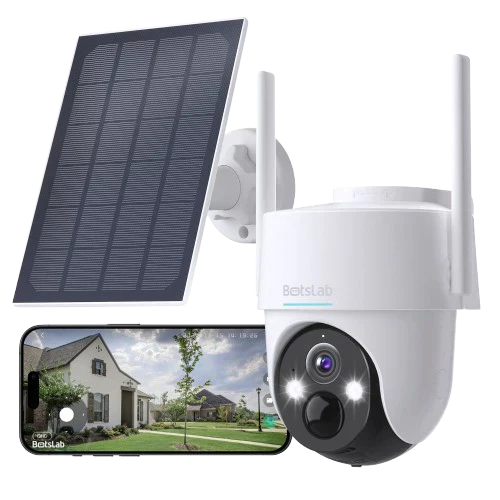
- Alimentation solaire : Solution idéale pour les sites isolés. Une caméra équipée d’un panneau solaire et d’une batterie interne haute capacité offre une autonomie illimitée, pour une sécurité sans souci.
- Alimentation par batterie : Les caméras sans fil dotées de batteries rechargeables longue durée offrent une flexibilité d’installation maximale. Elles sont idéales pour la surveillance temporaire de zones spécifiques, mais peuvent nécessiter un entretien périodique pour être rechargées.
- PoE (Power over Ethernet) : Si une connexion réseau filaire est disponible, les caméras PoE sont très fiables, car elles reçoivent à la fois l’alimentation et les données via un seul câble Ethernet.
-
Options de connectivité :
- Caméras 4G LTE : pour les sites sans accès Wi-Fi, les caméras 4G LTE sont la solution idéale. Elles utilisent une carte SIM pour transmettre les données vidéo via un réseau cellulaire, vous assurant ainsi un flux vidéo en direct et la réception d’alertes où que vous soyez.
- Wi-Fi double bande : Si le bureau du site dispose d'une connexion Internet, une caméra avec un Wi-Fi double bande (2,4 GHz et 5 GHz) puissant assure une connexion stable, même à distance du routeur.
Pourquoi la vidéo haute résolution et la vision nocturne avancée sont-elles non négociables ?
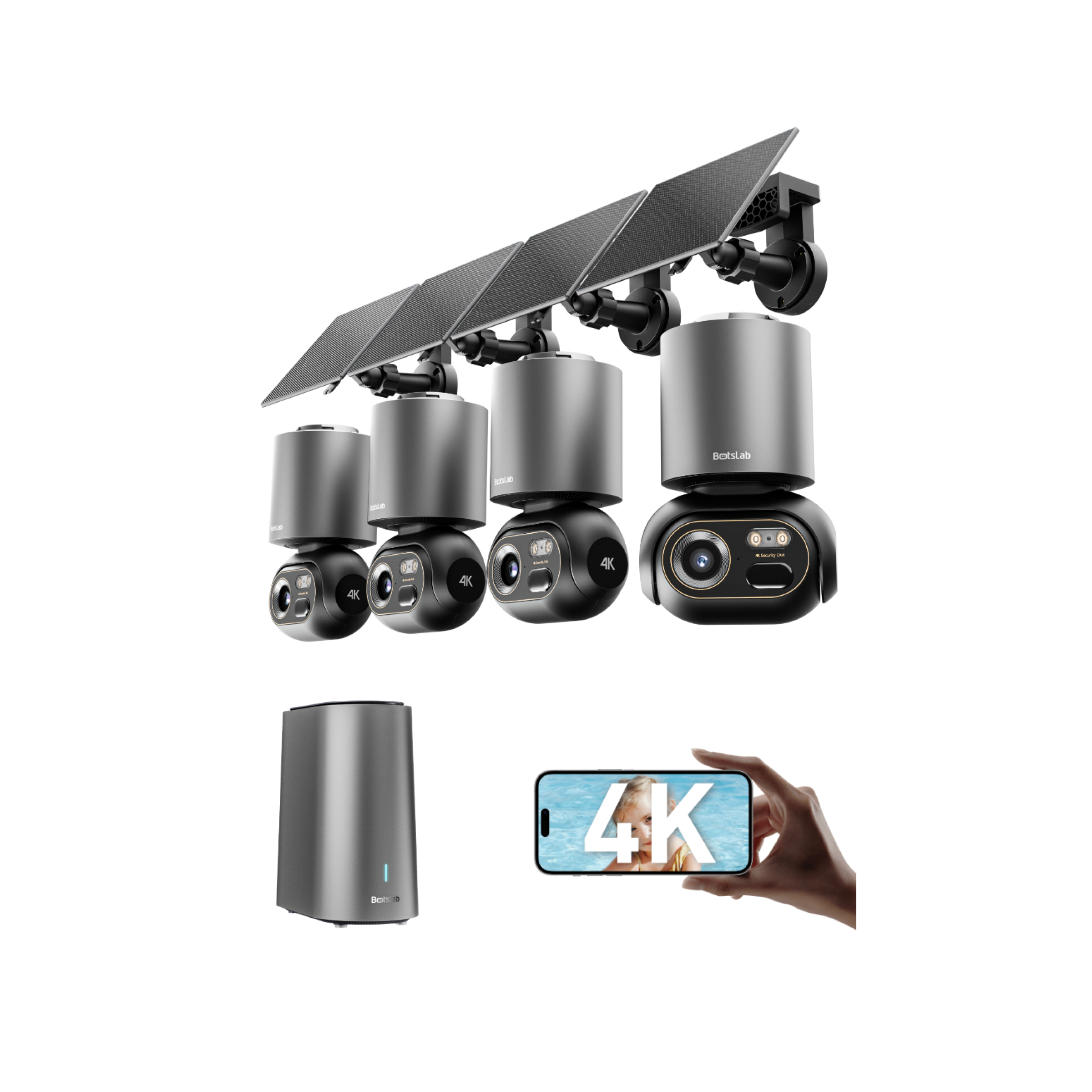
L'objectif principal d'une caméra de sécurité est de recueillir des preuves exploitables. Des images granuleuses et de faible résolution sont peu utiles pour identifier une plaque d'immatriculation ou le visage d'un intrus. La résolution 4K Ultra HD s'impose rapidement comme la norme en matière de sécurité professionnelle. L'incroyable niveau de détail qu'elle offre est essentiel pour zoomer sur des objets ou des incidents éloignés sans perte de netteté.
La criminalité ne s'arrête pas au coucher du soleil. La plupart des vols et des actes de vandalisme sur les chantiers ont lieu la nuit. Les systèmes de vision nocturne infrarouge (IR) classiques produisent des images en noir et blanc, suffisantes pour la détection mais peu performantes pour l'identification. Les caméras modernes dotées d' une technologie de vision nocturne couleur , comme celles proposées par Botslab, utilisent des capteurs sensibles et un éclairage d'appoint pour capturer des vidéos en couleur même en faible luminosité. Elles fournissent ainsi des informations bien plus détaillées et utiles, telles que la couleur d'un véhicule ou des vêtements d'une personne.
Comment les fonctions PTZ et les grands angles de vision améliorent-ils la couverture ?
Un chantier est un vaste espace ouvert. L'utilisation d'une caméra fixe peut engendrer d'importants angles morts. C'est là que les caméras PTZ (Pan-Tilt-Zoom) et les objectifs grand angle deviennent indispensables. Une caméra à large champ de vision (110° ou plus) peut couvrir une vaste zone depuis un seul point de vue.
Une caméra PTZ va encore plus loin, vous permettant de contrôler à distance sa direction et son zoom. Grâce à cette capacité de surveillance active, vous pouvez balayer tout le périmètre, suivre un sujet en mouvement ou zoomer sur un détail précis sans avoir à installer plusieurs caméras. Une seule caméra PTZ peut souvent remplacer trois ou quatre caméras fixes, ce qui en fait une solution économique pour une couverture complète d'un site.
Quelles sont les solutions de stockage les plus fiables ?
Un stockage fiable garantit la sécurité et l'accessibilité de vos enregistrements vidéo lorsque vous en avez besoin. Une solution hybride est souvent la plus adaptée aux chantiers.
- Stockage local : L’enregistrement direct sur une carte microSD dans l’appareil photo constitue une sauvegarde essentielle. En cas de coupure réseau, l’enregistrement se poursuit. Vous conservez ainsi physiquement vos enregistrements. Privilégiez les appareils photo compatibles avec les cartes de grande capacité (256 Go ou plus).
- Stockage dans le cloud : Stocker vos vidéos dans le cloud est la méthode la plus sûre. Même en cas de vol ou d’endommagement de la caméra, vos enregistrements sont stockés en toute sécurité hors site. Les services cloud proposent souvent des fonctionnalités avancées telles que l’analyse par IA, le partage simplifié des clips et une chronologie intuitive pour la consultation des événements.
L'utilisation conjointe du stockage local et du stockage cloud crée un système redondant qui protège vos données contre les pannes de réseau et le vol physique.
Quelles caméras excellent dans la prise de vue en accéléré sur les chantiers ?
La vidéo en accéléré est un outil précieux pour les projets de construction. Elle permet de condenser des mois de travail en une courte vidéo captivante, idéale pour le marketing, la communication avec les parties prenantes et la création d'un historique du chantier. Toutes les caméras de sécurité ne sont pas adaptées à cet usage.
Pour réaliser des vidéos en accéléré, une caméra doit être équipée d'une fonction permettant de régler l'intervalle de prise de vue (par exemple, une photo toutes les 10 minutes) et d'assembler automatiquement les images en une vidéo. Une haute résolution, comme la 4K , est essentielle pour créer des vidéos en accéléré de qualité professionnelle, où les détails les plus fins restent visibles. La caméra doit également être conçue pour une utilisation prolongée et disposer d'une source d'alimentation fiable, comme l'énergie solaire, afin de garantir une prise de vue continue tout au long du projet.
Comment la détection par IA transforme-t-elle la sécurité des sites web ?
Les systèmes de détection de mouvement traditionnels sont sujets aux fausses alarmes. Les bâches qui s'agitent sous le vent, les animaux qui passent ou les ombres changeantes peuvent déclencher des notifications constantes et non pertinentes, entraînant une « lassitude face aux alertes » et risquant de faire passer à côté de véritables dangers. C'est là que l'intelligence artificielle (IA) change la donne.
Les caméras intelligentes modernes, comme la Botslab Outdoor Cam S8 , utilisent des algorithmes d'IA sophistiqués, intégrés à l'appareil ou basés sur le cloud, pour différencier les personnes, les véhicules et autres types de mouvements. Vous pouvez configurer le système pour qu'il vous alerte uniquement lorsqu'une personne ou un véhicule pénètre dans une zone réglementée en dehors des heures d'ouverture. Cela réduit considérablement les fausses alertes et vous assure que lorsqu'une alerte est reçue, il s'agit d'un événement nécessitant réellement votre attention. Des fonctionnalités basées sur l'IA, comme le suivi automatique, peuvent même permettre à une caméra PTZ de suivre automatiquement la personne ou le véhicule détecté, en le maintenant dans le champ de vision sans intervention manuelle.
Quelles sont les meilleures recommandations en matière de caméras pour les chantiers de construction ?
Le choix de la caméra idéale dépend des besoins spécifiques de votre site en matière d'alimentation, de connectivité et de budget. Voici un aperçu des meilleures options adaptées à différents scénarios.
| Catégorie | Exemple de modèle | Points forts |
|---|---|---|
| Solution intelligente moderne | Caméra extérieure Botslab W510 | Résolution 4K Ultra HD, détection avancée des personnes et des véhicules par IA, vision nocturne couleur, contrôle PTZ, Wi-Fi double bande, étanchéité IP66. Idéale pour les sites disposant d'une connexion Wi-Fi et d'une alimentation électrique, elle offre une intelligence et une qualité d'image supérieures. |
| Idéal pour les réseaux cellulaires/hors réseau. | Reolink Go PT Ultra | Connectivité 4G LTE, compatible avec l'énergie solaire, résolution 2K, fonction PTZ. Le choix idéal pour les sites dépourvus d'infrastructure existante. |
| Time-lapse dédié | Brinno BCC2000 Plus | Conçue spécifiquement pour les time-lapses de longue durée, elle offre une autonomie exceptionnelle et un capteur HDR. Inégalée pour la création de time-lapses de haute qualité pour vos projets, elle est cependant moins adaptée à la sécurité en direct. |
| Robuste et polyvalent | Série Axis M | Extrêmement durable, résistance au vandalisme IK10, analyses avancées, PoE. Une solution professionnelle reconnue pour sa fiabilité et sa robustesse en environnements difficiles. |
Comment installer et positionner correctement les caméras sur un chantier ?
Le positionnement adéquat des caméras est aussi important que leur qualité. L'objectif est d'optimiser la couverture tout en minimisant les angles morts et les vulnérabilités.
- Optimisez votre visibilité : installez les caméras en hauteur (3 à 4,5 mètres) sur des poteaux, des remorques de chantier ou des structures adjacentes. Vous bénéficierez ainsi d’un meilleur point de vue, d’une zone de couverture plus étendue et les mettrez hors de portée des vandales.
- Sécurisez les points de passage stratégiques : priorisez les entrées, les sorties, les zones de stockage de matériel, les dépôts de carburant et les locaux de rangement des outils. Ce sont les cibles les plus probables des vols.
- Attention au soleil : évitez de pointer les caméras directement vers le soleil. Le lever et le coucher du soleil peuvent créer des reflets et des halos lumineux, rendant les images inutilisables. Dans la mesure du possible, orientez les caméras vers le nord ou le sud.
- Fixez la caméra et les câbles : assurez-vous que la caméra est solidement fixée. Si vous utilisez des caméras filaires, protégez les câbles dans une gaine pour éviter qu’ils ne soient coupés facilement.
- Utilisez différents types de caméras : combinez une caméra grand angle pour la surveillance générale avec une caméra PTZ permettant d’explorer des zones spécifiques plus en détail. Vous créerez ainsi un réseau de surveillance complet et flexible.
Questions fréquentes sur la sécurité des chantiers de construction
Puis-je utiliser une caméra de sécurité extérieure classique pour un chantier de construction ?
Certaines caméras domestiques haut de gamme (comme celles certifiées IP66 et dotées d'une intelligence artificielle avancée) peuvent fonctionner avec une connexion Wi-Fi et une alimentation électrique, mais elles peuvent manquer de robustesse, de connectivité cellulaire ou d'options d'alimentation solaire, pourtant indispensables sur un chantier. Une caméra dédiée au BTP ou à usage professionnel est souvent un choix plus fiable.
Combien coûte un système de caméras pour un chantier de construction ?
Les prix varient considérablement. Une simple caméra 4G solaire de haute qualité peut coûter entre 300 et 800 dollars, sans compter le prix d'un forfait de données mobiles. Un système complet multicaméra avec un enregistreur vidéo réseau (NVR) dédié peut coûter plusieurs milliers de dollars. Les caméras intelligentes modernes offrent un excellent compromis entre fonctionnalités avancées et prix abordable.
Un appareil photo 4G LTE est-il toujours nécessaire ?
Pas toujours. Si votre chantier dispose d'un bureau de chantier avec une connexion internet fiable, une caméra Wi-Fi performante peut s'avérer plus économique, car elle évite de souscrire un abonnement mensuel de données mobiles. Une caméra 4G n'est indispensable que lorsqu'aucune autre source d'accès à internet n'est disponible.




Partager:
Quelles caméras de sécurité offrent les zones de détection de mouvement les plus personnalisables ?
Quelle est la meilleure caméra de sécurité PTZ (Panoramique-Inclinaison-Zoom) pour un usage domestique ?